
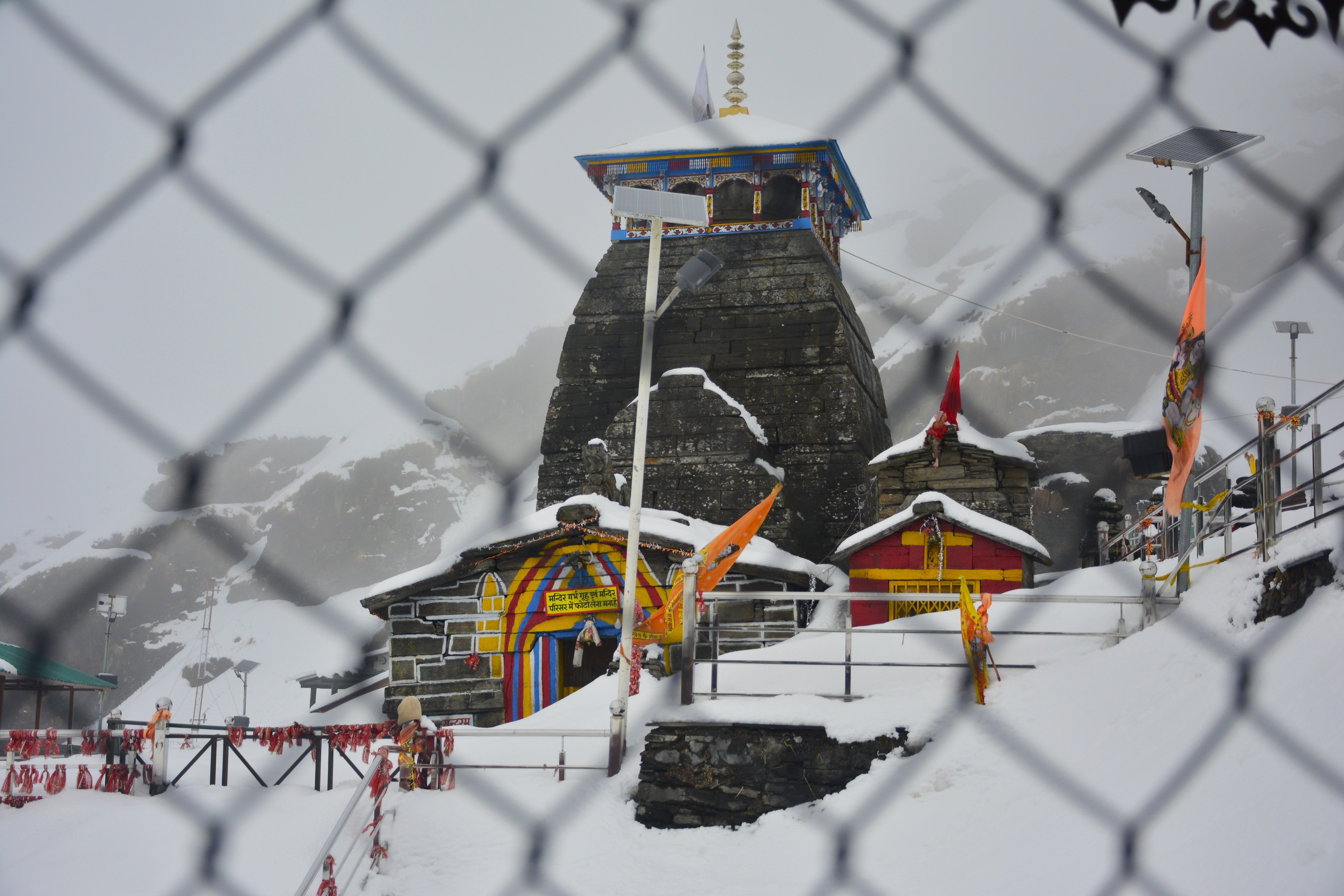

Tungnath Trek
The Tungnath trek is a mix of sweat and serenity, takes one to the world’s highest Shiva temple at 12,073 ft. A 4 km uphill challenge from Chopta, it rewards us with divine vibes, Himalayan panoramas, and a leg-day workout—no gym required!
Fresh off our epic Chitkul road trip, the four of us had been bitten by the mountain bug yet again. We had ambitious plans to hit the road to Chopta over the Holi long weekend. But as fate would have it—courtesy of festive chaos and packed schedules—Pramanshu and Gaurav Ahuja had to bow out.
Instead, our families decided to join us for this adventure. So, there were five of us: me, my wife, my son, Dr. Arya, and his wife.
Tungnath Itinerary
14-Mar-2025 (Friday): Depart from Gurgaon at 02.00 hrs, reach Ukhimath by 15.00 hrs, stay at Humming Bird by Aaryam
15-Mar-2025 (Saturday): Drive from Ukhimath to Chopta, trek to Tungnath & Chandrashila, drive back to Tilwara, stay at GMVN, Tilwara, next to river Mandakini
16-Mar-2025 (Sunday): Depart from GMVN, Tilwara after breakfast, drop Dr. Arya to New Delhi Railway Station by 21.00 hrs

Gurgaon to Ukhimath drive
With Holi falling on a Friday, it was the perfect excuse for a long weekend getaway. So, we made a plan—Dr. Gaurav would fly in from Bhopal to Delhi on Thursday evening, and by 2 a.m. Friday morning, we’d hit the road from Gurgaon, heading towards Tungnath.
Chopta, the base for the Tungnath trek, is beautiful but very basic. It has no electricity and mostly offers tent stays. So, we decided to be a little more comfortable and booked our stay in Ukhimath, a quiet little town about an hour before Chopta, where the trek begins.
Our choice of stay was Humming Bird by Aaryam—a lovely hotel with all the comforts we needed. It had proper electricity, hot water, good food, free parking, and warm, cozy rooms—just what we wanted before starting our mountain adventure.
We started our journey from Gurgaon at 1:00 a.m. on Holi morning. With hardly any traffic on the roads, we cruised smoothly and were already on the Delhi-Meerut Expressway within the first hour. Our original plan was to stop at Naivedyam on the Meerut bypass by 5:00 a.m. for breakfast. But thanks to the clear roads and steady speed, we got there an hour early—only to find it closed!
We kept driving as the first light of dawn started to break. That’s when sleepiness hit me hard. I began feeling tired and foggy, struggling to focus. Dr. Arya, always the doctor, explained it could be hypoglycemia—low blood sugar caused by not eating enough, which can lead to dizziness, fatigue, and poor concentration. Diagnosis accepted!
Our first proper stop was at Haridwar, near the famous Har Ki Pauri. We didn’t go to the ghat, but found a nearby tea stall and grabbed some sugary chai. That perfect mix of caffeine and carbs worked like magic – my energy bounced back, and we were back on the road, heading toward Ukhimath with renewed spirit.


The XUV seemed to be enjoying the journey just as much as we were. In the city, it usually sips fuel at around 9 kmpl, but out here on the open highway, it climbed to an impressive 17 kmpl. For a second, I thought the instrument cluster had lost its mind—but no, the numbers were real. Even after 9 years together, this beast still finds ways to surprise me.

We took several breaks along the journey, enjoying the changing scenery and stretching our legs. By 3:00 p.m., we finally reached our stay for the night—The Humming Bird by Aaryam.


Exhausted from the long drive, we quickly freshened up and slipped into a much-needed nap. As the sun dipped behind the mountains and the chill set in, we gathered for a short rum session to warm up, followed by a hearty, delicious dinner at the hotel. The night was cold but peaceful, and we went to bed with hopes of waking up to a perfect morning.
But as it turned out… the mountains had other plans.
Tungnath Trek
It had rained all night, and by morning, the mountains wore a fresh coat of white. We guessed it was still snowing higher up. Just as we were debating whether to go ahead with the trek, a light drizzle began—then turned into steady rain, and within ten minutes, it was a full-blown downpour. The plan was hanging in the balance. But with our checkout time approaching, we decided to stay practical—grab some breakfast, check out, drive up to Chopta, and assess the situation on the ground. The clock read 08:00 hrs.

Breakfast at Aaryam was nothing short of a feast—alu poori, halwa, poha, parathas, tea, coffee, and even milk. With full stomachs and warm hearts, we checked out and stepped straight into a downpour. The road to Chopta was smooth but narrow and winding, with rain lashing fiercely against the windshield, making visibility a real challenge. Still, we pressed on, inching closer to our destination. Just a couple of kilometers before the trek starting point, we spotted snow, lightly dusting the road and perched on treetops. One final bend, and suddenly, the valley opened up before us, completely blanketed in snow. It was magical.

The rain had finally stopped, but Chopta was in complete chaos. The snow had turned into messy slush, thanks to a steady stream of vehicles splashing muddy water everywhere. Parking spots were packed, and cars were lined along the roadside, where melted snow mixed with garbage flowed freely.

Still, we weren’t ready to give up just yet. We decided to start the trek, telling ourselves we’d go as far as we could—and if things got too tricky, we’d simply turn back. The clock struck 10:00 hrs as we took our first step.


One step onto the snowy path, and we were already slipping. Thankfully, the nearby shops were renting out spike crampons for shoes. At first, I wasn’t sure we’d need them—but I’m glad we rented a pair. The difference in grip was immediate and much needed. It had snowed earlier that morning, so everything was still fresh and powdery.

As we began the trek, the snow on the trail had turned black and slushy from all the foot traffic. The slope wasn’t too steep, but the melting snow made the paved path quite slippery. Even with the spikes, it took some effort to stay balanced.


Still, the scenery made up for it all—snow blanketed everything around us, creating a magical winter landscape. The temperature hovered around zero degrees Celsius, but with each step uphill, I started warming up. Eventually, I even felt the need to take off my jacket.
After trekking nearly a kilometer uphill, my mind began playing tricks on me. More than once, I felt like giving up—just turning back, driving down to Tilwara, and calling it a day. I quit in my head so many times. But something—maybe my family, my friends, the fellow trekkers, or just the stunning scenery—kept nudging me forward.
This time, I was determined to finish what I had started. Step by step, turn after turn, through slips and stops and awe-inspiring views, we finally made it to the summit. The time read 13:30 hrs.

The temple was closed for the winter, yet the place buzzed with people. It’s true—India runs on faith. After soaking in the views, clicking countless photos and videos, we began the descent.
Surprisingly, the return trek was tougher. My boots slipped often, and we had to tread carefully. Still, going downhill was quicker. Within 2.5 hours, we were back at Chopta.
The first thing we did? Ordered hot tea and picked up some souvenirs—fridge magnets, keychains, the usual trail memories. The time was 17:00 hrs.
The drive back to Tilwara was smooth but tiring. My foot ached from the trek, and the winding roads didn’t help. We reached GMVN Mandakini at Tilwara by 20:00 hrs—exhausted, sore, but with hearts full of mountain magic.
Tilwara to Gurgaon
The clock read 06:00 hrs on a peaceful Sunday morning. I woke up at GMVN Tilwara to the sweet sound of birds chirping. After a quick stroll by the river, camera in hand, we headed for breakfast. The spread was hearty—parathas, aloo poori, poha, tea, and coffee—exactly what a mountain morning deserves.

We left for Gurgaon at 09:30 hrs. The GPS showed an ETA of 18:30 hrs at New Delhi Railway Station—perfect timing for Dr. Arya, whose train was at 21:00 hrs. All seemed smooth until we reached Devprayag, where the map warned us of traffic piling up near Rishikesh. Our arrival was now expected at 19:00 hrs—still manageable, we thought.

But then came Rishikesh. A bumper-to-bumper traffic jam on the main road pushed our ETA to 20:15 hrs. That’s when worry kicked in. We had no choice but to skip lunch and power through, heading straight to Delhi Railway Station without any breaks.

With every jam, both the car speed and my heart rate picked up pace. We took our first and only bio-break on the Meerut–Delhi expressway—timed to the second: 6 minutes! We dashed to the washrooms and were back on the road in no time.

By some miracle (and a bit of aggressive driving), we reached New Delhi Railway Station by 20:30 hrs—leaving Dr. Arya just 30 minutes to get inside, find his platform, and board his train.
Now that the pressure was off, we headed to Connaught Place and treated ourselves to a well-deserved, leisurely dinner at KFC. By the time we rolled into home in Gurgaon, the clock read 22:30 hrs.
The quick whirlwind trip to Tungnath had finally come to an end.
